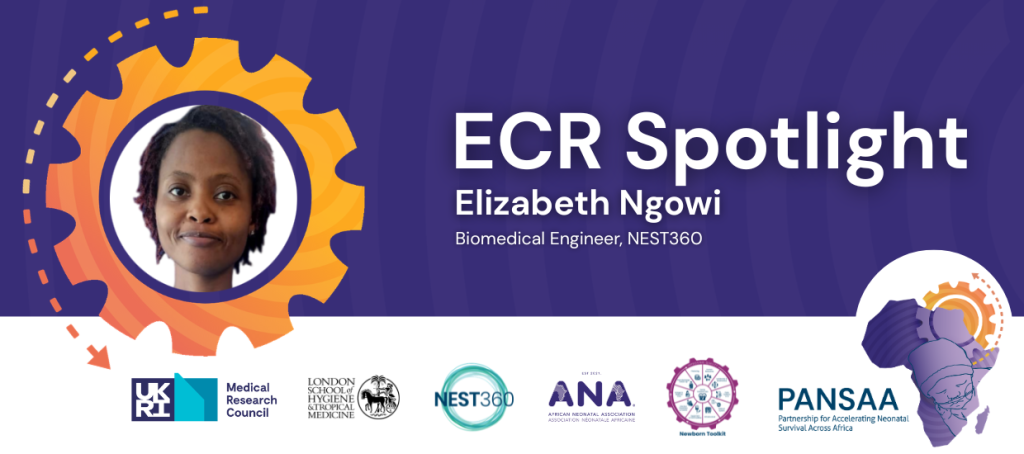
Tell us a bit about yourself

Name: Elizabeth Ngowi
Current role: Biomedical Engineer
Country: Tanzania
I am a biomedical engineer working with the NEST360 Alliance in Tanzania, where I support the deployment and maintenance of lifesaving technologies for newborn care. My path into neonatal health was shaped not just by neonatal technology trainings, but by witnessing how important the first moments of life can be when the right medical devices are missing or fail especially at the critical times. This has driven my focus on making sure that lifesaving technologies are not only innovative, but also reliable and consistently available where they are most-needed.
I work closely with healthcare providers and hospital BMETs to translate engineering solutions into meaningful clinical impact. What motivates me is the opportunity to reduce preventable newborn deaths by contributing to stronger, more resilient health systems through sustainable medical technology-driven solutions by ensuring there are well functioning devices, in the right place at the right time. This can mean the difference between life and loss for a newborn.
What is your research focus?
Neonatal survival, with a focus on Kangaroo Mother Care (KMC), health systems, and the implementation of appropriate technologies.
I am developing a Target Product Profile (TPP) for technologies to measure Kangaroo Mother Care duration. This includes contributing to a scoping review protocol to map existing evidence and measurement approaches, with the aim of informing practical, scalable solutions to improve monitoring and neonatal outcomes.
Why does this research matter?
I am most passionate on addressing the gap for measuring and maintaining effective Kangaroo Mother Care for preterm and low birth weight infants. KMC is a proven to be low-cost intervention, and its duration is rarely tracked accurately in routine care. Without reliable measurement, it is always difficult to ensure adherence, evaluate impact, or improve quality of care. I am motivated by the opportunity to develop practical solutions that make KMC visible, measurable, and ultimately more effective in saving newborn lives.
The mentorship experience
I joined the PANSAA mentorship scheme to strengthen my skills as an early-career researcher in neonatal health. My hope is to deepen my research capacity, particularly in evidence synthesis and translating findings into practice as well as leadership development. I am also looking to gain mentorship and collaborations to advance my work on KMC technologies and grow as a leader in improving neonatal outcomes.
Looking ahead
Over the next five years, I see my work having the greatest impact in advancing how KMC is measured and implemented, especially in low-resource settings. By developing a robust Target Product Profile for technologies that accurately track KMC duration, I aim to support the design and adoption of practical tools that strengthen monitoring and improve quality of care. Success for me as an early-career researcher means having enough research skills for generating evidence that informs real world solutions, contributing to scalable innovations, and influencing practice and policy to improve outcomes for preterm and low-birth-weight infants.
What advice do you have for other Early Career Researchers?
My advice to early-career researchers based in Africa who are interested in neonatal health is to stay grounded in the realities of the settings you serve. Focus on solving practical problems that directly impact care, such as improving the implementation of proven interventions like KMC. Seek mentorship, collaborate across disciplines, and be open to learning from both data and frontline healthcare providers. Also build strong research skills while thinking about how your work translates into action.
Connect with Elizabeth!
- Linkedin: Elizabeth Ngowi
- Email: ejngowi@gmail.com